Tuesday, January 29, 2019

Yarrow, Buddleia, and Other Pollinators

Let's face it. It's a good thing that tomatoes are self-pollinating because tomato flowers aren't sexy. Just a little dance in the breeze and like peppers, they are good to go.  But if you are growing cucurbits like squash, melons or cucumbers or mallows like cotton or okra you need a little help in the pollinating department. That's where our friend the bees and wasps are our friends in the garden.

The Lure of Color

Okra flowers are not flashy. They are beautifully formed and delicately colored but they aren't something that can be seen at a distance.

Squash, melon and cucumber flowers are usually a nice shade of yellow. But yellow isn't always an attractive color to lure in pollinators. Bees and our other flying friends are attracted by pinks, reds, and purples. There's a reason most hummingbird feeders are red.

Red can be seen at a distance. That makes it a great lure for pollinators.

Last summer I had great success getting pollinators in the garden with a few plants that flashed the colors the bees and wasps wanted.

Pink yarrow, purple buddleija and lavender were like magnets to the yard. Once lured in, the bees then moved along to visit the veggies that needed their attention.

The lure of sweet alyssum could not be ignored.  The yarrow, buddleija and lavender will be back next year. I won't need to plant those again. Alyssum isn't expensive, so I'll be planting it again as well.

A Time to Plan

My vegetable and flower gardens are asleep right now. Buried under a blanket of snow. But while the soil rests, I continue to toil.
I'm planning the garden. I'm selecting cultivars to try and longing for the return of tried and true friends. In just another few weeks, it will be time to start seeds.

During this time off, while you flip through the seed catalogs, don't give short shrift to the flowers. Not only will they delight your eyes and nose, they will make your garden more productive.

I'll start with pansies in pots. Hungry bees will be happy to see the blooms come late February and my yard will be a regular part of their food hunting regime. That's going to be important come June and July when I have vegetables to be pollinated.

But until then, the soils rests. And I plan for pollinators.

Wednesday, January 9, 2019

New Gardens New Beginnings

No, I didn't die. The tilapia in the aquaponic fish tanks didn't eat me. God called me to do something that many of my friends thought was crazy. I up and moved to Central Ohio. I am now living close to Dear Son and Bestest Grandaughter.  July 4th I said to hubby, why don't we think about moving up to Ohio to be close to Dear Son and his family. August 8th my home of 23 years had been sold for cash, many of my plants given away, and the moving truck loaded for Central Ohio.

snow angel in Ohio yard

New Zones to Learn

So, I've been growing all my life in the southern zones. Gimme a zone 9 or 10 question or problem and I probably had a solution or experience with the situation. My house in South Florida didn't have heat. I didn't need a heater. It only got really cold every few years. Then it was only for a day or so. No, my money was in AC!

My North Carolina gardens are zone 5. But because I am not here full time, I rely heavily on spring blooming bulbs and summer blooming shrubs. Lots of low maintenance plants. Things that can survive if I am not here to water or fertilize. Tough plants.

My Central Ohio gardens are Zone 5, I am here full time, and they grow things I've only ever heard of and many things I have never seen. It's been a challenge. But if I can learn to grow in a new zone, you can learn to grow too. Because it's almost like I was starting from scratch. So I started with stuff I knew should work.

Start Easy

So, I moved into a house built in 1901 and the gardens had been ignored for about 10 years. I moved in the fall and I started with what I knew.....bulbs. My first plantings were daffodils, tulips, and crocus.

I had grown them in the mountains, so I knew how and when to plant them. Now what kind to plant was another story. Thus begins the trial and error of learning what varieties are hardier than others.

Learn the Soil

So, in South Florida, we had no soil unless you built it yourself. Before that, in Houston we had a clay soil, and before that in Corpus Christi we had sand and clay. 

In Ohio we have clay. First things first. We brought in a truckload of a combination of compost from the Columbus Zoo and topsoil.  We used this mixture to work into each planting area to break up the clay. Compost is great but it takes time to build yourself. That's why I imported composted material from the zoo.  If you have a zoo in your area, check and find out if they sell compost or give away manure.

Make a Friend or Two

The most important thing I did was connect with a person that was successfully gardening in my neighborhood. If you want to know what will grow in your area, ask the people that are growing. Plant people love to talk plants.
But you know that if you've spent any time on a plant forum.

I was lucky enough to find a woman in my neighborhood that runs a concierge lawn service. She doesn't do lawns, but she plants and cares for garden beds. I met another person that had been vegetable gardening for years in Central Ohio.

These two became invaluable resources.

Early Summer Blooms in new bed - Daylilly, verbena, Zinnia, petunia, Salvia

And the adventure continues.

Wednesday, January 20, 2016

January in the South Florida Garden


It's finally the growing season here in South Florida.  While you are perusing seed catalogs and planning your summer gardens I am busy in the garden.  You knew that the seasons were changing because the temperatures dropped: I knew the seasons were changing because the humidity dropped. 

Naked Plumeria
Your trees became a quilt of colors.  Maples become glorious red and oranges, oaks become beautifully burnished with russet, and the poplars explode in all shades of yellow.  Winds come and then the leaves fall to the ground, crunching underfoot. 

Bolivian Sunset Gloxinia
In South Florida, the leaves of my plumerias turned brown and fall off.  The jacarandas and poincianas do likewise.  No stunning displays of color as the leaves slowly turn off for the winter.  The plants know the seasons are changing because the days become shorter and the nights are longer.  They need more sunlight than is available, so they just close up shop, turn brown, fall off.  Thank goodness these trees have interesting branching patterns.  Because they look like sticks.

So, while the plumerias aren't fans of the short days, many common garden plants love the shorter days, longer nights, and lower humidity.  As soon as the days get shorter, the hardy Bolivian Gloxinias (gloxinia sylvatica) awake from their slumber and poke their heads through the soil.  By Christmas, they are always in glorious bloom.  The tubers in the photo above have returned every year for at least the last ten years.  The biggest challenge is keeping them in the bed and not in the path.  Every fall, I find new pups that insist on growing in the pathway.  They are always tucked firmly back in the bed.


Cooler nights brings on the blooms in many orchids.  Kalanchoes are also reliable winter bloomers in the South Florida garden.  

While the phalaenopsis will start to set buds to bloom in spring, the dendrobiums and cymbidiums like nighttime temperatures in the 60s and 70s.  


Tuesday, April 21, 2015

South Florida Gardening Winners and Losers

So if you follow this blog, you must think I died or quit gardening.  Quite the contrary.  While the rest of the country has been dreaming of gardening, I've been doing it.

The South Florida growing season is drawing to a close and the rest of you are just getting started,  Here is what worked for me this year and what was a flop!

The Biggest Loser!

cucumber growing with aquaponicsBy far, the worst performers in my garden this season were the cucurbits!  I am not holding a pity party for them however.  They had much going against them, but they didn't give it much of a try.  I know I was not alone.  During a visit to a local nursery in January I overheard the staff in charge of the vegetable section tell a customer they had no luck with cucurbits either.  Our November was cooler than normal, followed by a December that was not only cool, but it was damp as well.  A quick review of cucurbit growing conditions does not include the terms "damp" or "cool".  I managed to get just a few Straight Eight cukes out of a raft using the Deep Water Culture (DWC) technique.  Growing a vining plant using DWC is always a challenge.  We ran string to get it to the garden frame and then just let it grow from there.  The plants in the flood and drain grow beds never produced at all. I ripped them out in January.  Despite many different attempts, I was not able to get new seeds to sprout.  Zero squash, zero melons, few cucumbers.  Cucurbits were a bust!

The Loser Runner Up!

Is there a runner up loser place at the podium?  I don't know if it is official place, but cucurbits were almost beat out by the nightshades as poor performers.  The cool and damp conditions were not embraced by the eggplants.  They were tolerated by the peppers and the tomatoes thrived so the nightshades mixed performance kept them out of the bottom position.  eggplant in aquaponics The irregular weather conditions resulted in problems with chlorosis.  I had to chelate more this season than I have in any season past.  This picture is a perfect representation of the eggplant problem this season.  I harvested less than a dozen fruits.  Usually I can keep eggplant going into May.  This year it was done by February. This is the second year I have grown eggplants relying solely on aquaponic methods. Last year was such a success!  This year not so much.  Next growing season, I commit to growing with and without soil. 

The Good Stuff

Now for the winners!  I tried celery in a flood and drain bed for the first time.  OK, true confession time, it is the first time I have tried to grow celery ever.  Maybe celery is easy to grow, maybe the cooler than normal temperatures were a factor.  I just know that it grew exceptionally well. It has been tasty too!
celery in aquaponics
So next year I will try celery again and see if it is a fluke.  As an aside, I discovered that celery leaves are pretty tasty when they are young but bitter when they are older.  It is awesome to harvest your celery and then not spend all that time in the kitchen scrubbing the dirt off.  That is an unsung benefit of growing with aquaponics, faster produce cleaning in the kitchen!


swiss chard in aquaponics
Another big winner were the greens.  I grew kale and swiss chard with lots of success.  The chards took a littler longer to get going this year, but once they got going, there was no holding them back. The chards and kale were grown in both NFT tubes and flood and drain beds.  I didn't try any of these in soil this season.


Last year, the greens in the NFT tubes were the big winners, this year the plants in the flood and drain beds out performed their tube counterparts.  It just goes to show that when it comes to gardening, there are always surprises. 

This was my first season with Dinosaur kale.  It grows very quickly no matter the weather or light conditions.  Three plants were all that were necessary to provide more than enough for our table of 2.

The Winners!

The winners were the mints, including basil and the peppers and the tomatoes.  I had tomatoes in soil and tomatoes in my aquaponic gardens.  I tried something old, Mr. Stripey, something new, Arkansas Traveler, and something borrowed and blue, Indigo Rose!
basil in aquaponics
The basil went wild in the NFT tubes.  I had to end up moving a Dinosaur kale to make more room. 

indigo rose tomato and cayenne pepper in aquaponics
 This is an Indigo Rose growing in an NFT Tube with a little cayenne pepper poking out behind it.  The Indigo Rose seeds were from my son's garden in Ohio.  When I visited in August, I opened one of his ripe tomatoes onto a paper towel and spread out the seeds and flesh to dry.  I brought the dried paper towel home and planted it, towel and all in October.  The Indigo Rose was by far the most prolific producer.  I had them in DWC rafts, flood and drain beds and soil.  They performed well in all situations.  The only down side to this tomato is that it takes for-fricking-ever to ripen.  The portion of the tomato that is kissed by the sun turns a bluish purple, the remainder will turn red or yellow when the tomato is ripe. 
Arkansas traveler tomato in aquaponics
 This was my Arkansas Traveler when it was setting its first fruit.  I only had one plant this year, but will certainly save seeds (using the paper towel method) because this is a great tasting tomato. It doesn't grow extremely large in either plant size or fruit size.  When ripe, it is a pink color.  It is very tasty and low acid.
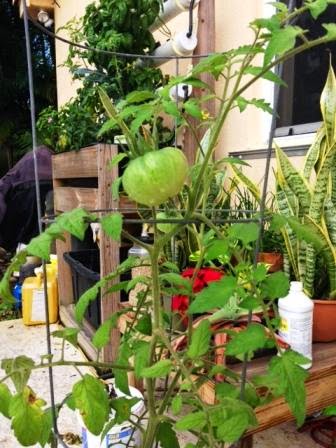
mr stripey tomato
This is a "Mr. Stripey" that was growing in soil in a pot.  A real down side to buying starter plants is that anyone with a sense of mischief can cause problem in the garden center.  I bought this plant as a start and it was clearly marked "Mr. Stripey", which happens to be one of my favorite tomato varieties.  As it began to set fruit, O started doubting the veracity of the tag.  The tomatoes weren't as large as they should be and didn't exhibit stark striping.  When the first fruits started to ripen I knew I had been had.  The fruits turned red and not the beautiful orange-ish shade sported by Mr. Stripey.  I don't know who this imposter is, but it produces a medium sized red tomato with very light striping.  Unlike Mr. Stripey, it is very low acid. I am not saving the seeds.  I considered prosecuting it for impersonating a beloved heirloom, but decided the real culprit was the person at the garden center, not the plant.

Inedibles in Closing

  Believe it or not, the winter months aren't all about vegetables here at the end of the peninsula.  The shorter days mean that lots of plants start to bloom.  While you are looking at snow, I'm looking at kolanchoes.
 I'm enjoying the orchid blossoms.
And the Bolivian gloxinias start to bloom before Christmas and take us all the way through to Easter.
 
My season was a mixture of hits and misses.  Let me know what you are doing to make your season a success.  I'd love to hear from you!

Tuesday, July 22, 2014

Combating Powdery Mildew

The rainy season continues.  In the Month of June we had a little over 15 inches.  So far this July we have had 13 inches (not counting today) and still a week left to go.  Rainy season means the biggest gardening task is combating powdery mildew.

Powdery mildew is a disease caused by the fungi Erysiphales.  It is a real problem when the humidity and heat rise and will significantly reduce the harvest of your garden. 
powdery mildew

The bad news is that I have it on some of my okra in the aquaponic gardens. Because of the fish component in aquaponic gardens, you must be careful that what ever you place on the plants will not harm the fish or the fish's environment.  The good news is that it is fairly easy to combat with non-toxic substances like baking soda. 

use baking soda to treat powdery mildew
Every day for the last week or so I have said I need to treat that powdery mildew, but the rains have beaten me every day. So this morning I got an early start and before it rained, I mixed a solution of  2 teaspoons of baking soda into 1 cup of water.  If you need to make a larger batch, that is a 1:24 ratio of baking soda to water.  Here is a picture of the ingredients and tools (along with the morning's harvest of okra).  I like to harvest before I do any treatment.

Baking soda is alkaline (that means it has a high pH) and anything with a high or low pH will kill mold.  Powdery mildew may have a fancy name, but it is just mold.  Because I want the alkaline mixture to get the mold but not mess with the pH of the fishes' water, I applied it with my basting brush.  If I were doing this in a soil garden, I would make a big batch and just spray it on the leaves.

As you can see, this okra is doing really well.  The leaves are huge!  But they do have powdery mildew.  I
powdery mildew on okra
Okra on DWC raft
have been eating from the okra plants in the aquaponic gardens for about 2 weeks now.  The okra plants in soil have just started to flower.  Most of the gardeners I know in South Florida take the rainy season off. They are all amazed that I am able to grow anything right now, even though it is mostly okra and purple hull peas.

Speaking of purple hull peas, would you look at these beauties!  If you are not familiar with this plant, it is a legume and produces a shelling pea.  The pods start off green and then turn the most beautiful color of purple as they ripen.  The taste is a bit milder than a black-eyed pea,
but they do have a black eye.  It is a plant that used to be common (like kohlrabi) but has fallen out of favor.  I am hoping that the new interest in heirlooms will bring back the popularity of this plant.

The one thing that really likes all this rain is the lemongrass.  I can't cook with it fast enough to keep in in check.  If you have any ideas for cooking with lemongrass please share them. Because it is growing like mosquitoes with all this rain.


Speaking of which, I just finished treating and taking pictures when I heard the first rumble.  When I look around this is what I see!

Thursday, July 3, 2014

Okra in Aquaponics

It has been awhile since I've posted.  As I've written before, there is not much gardening that goes on in South Florida once the rainy season starts.  Our temperatures are in the 90's almost everyday.  In the month of June we had over 15" of rain and that was before our first brush with tropical weather.  To say that it is hot and humid would be like saying the Atlantic Ocean has a little water in it.

It is very hard to grow anything edible in those conditions (well except that the mangoes and avocados are getting ripe).  The irony of all ironies is that I can grow a few things using aquaponic techniques during this time.  Yes, plants that would drown from all the rain if they were planted in soil will do OK if they are planted in water.  They just must be plants that can take the heat.

Right now in my at home aquaponic gardens, I have purple hull peas, mint, lemon balm, rosemary, vinca, french marigold, oregano, miniature pepper,  green onion, and lots of okra growing.  The okra are the plants from the Floaters versus Sinkers seed wars I chronicled.  As I suspected, there is really no difference between the floater and sinker seeds once the seedlings were planted.

However I am seeing a difference in how the okra is growing using different techniques.  Unfortunately I don't have photos of  the plants that were growing the best.  These were the plants that were in NFT tubes.  Even though the okra variety is Cajun Jewel, a dwarf variety, they still get several feet tall.  Once I could no longer reach the plants in the tubes, I had to take them out and transplant them.  This involved pruning both roots and tops.  I re-established them in my newest  media grow bed with my purple hull peas and due to the pruning they are now the smallest of the plants.  Bonsai okra so to speak.

okra in aquaponicsThe okra in the DWC (deep water culture) rafts are growing steadily.  However they have not flowered and produced fruit yet.  As you can see, the plants are exceptionally healthy and should be flowering any day now.  By the way, the crud on the raft is caterpillar poo.  Hubby thought it would be nifty to put some zinnias on the raft, but instead grabbed some of my milkweed seedlings.  Needless to say it only took a few days to have monarch eggs and within 10 days they had hatched, eaten every bit of milkweed on the raft, and then conscripted into the caterpillar relocation program (CRP).

The okra that were planted in media beds filled with hydroton and gravel are also doing well.  They have just started to flower.  What is odd about this set outperforming the set in the raft is these plants receive an eastern exposure.  The plants in the raft get a southern exposure.  Southern exposure equals more sun, however the eastern exposure plants are outperforming their southern kin.  I know that there are people sold on DWC for all plants, but it has been my experience that in most instances plants in media beds do better.  Maybe I am doing something wrong, but I get more nitrates using a media bed than depending on the biofilm on the raft.

The current superstar okra (since their kin in the NFT tubes got the bonsai treatment) are the okra that are in a bed of lava rock and a small layer of gravel.  I really don't like planting in lava rock because even with gloves on your hands it is hard work and always seems to ruin my manicure.  But those lava rocks provide an incredible amount of specific surface area for the nitrifying bacteria to take hold.  The honeycomb
structure is similar to zeolite.  These okra plants have already begin to bloom, fruit, and produce their first harvest.  The okra have already crowded out the bottom row of NFT tubes that are mounted over the bed. I am planning on using that tube again when the okra get just a bit taller.  As I did last year, I will use the okra as a shade for other plants on that bottom tube.  This system is getting southern exposure like the DWC system, but it is doing so much better.

I was joking with a fellow gardener on-line this morning that I know so much useless information about okra.  It is in the same family as the hibiscus and cotton.  If you have ever seen an okra bloom, you know that they are very beautiful flowers.  And if you time time to actually look at an okra bud and bloom then you can easily see how hibiscus and okra are related.  The buds and flowers are shaped in a very similar manner.
okra in aquaponics bloom
I know lots of people don't like okra, but I think you just have to give it a chance.  It is only slimy if you boil it.  People eat oysters and they are slimy!  If you have an overabundance of okra, pick it while it is small and make pickles.  I like them pickled hot, bread and butter, or dill style.  I don't think I have ever made the acquaintance of an okra pickle that I didn't like.  I can't say the same for cucumber pickles.  Besides what would gumbo be without okra?  Okra is the defining ingredient in gumbo.  If it isn't thickened with okra, then it is just another soup. And okra makes an excellent fried vegetable. 

 By the way, I planted some of my okra seedlings in soil on the same day as I placed the others in the aquaponic gardens.  I've even given them a little fish emulsion to try to make things even.  The growth of the plants in soil can't be compared to even the slowest growth of the plants in the DWC system.  The soil based plants are not as richly colored and have not produced a bud or bloom yet. Their leaves are smaller and the plant stems thinner.  But they do attract visitors.  I wonder if this monarch is related to any of the 'pilars that started out on the DWC raft?  

If you have never tried to grow okra, I encourage to give it a shot. It is very forgiving and once it gets going is a prolific producer.  Even if you grow in soil, I still recommend growing the dwarf varieties because okra can get tall.  And last but not least, be sure to save some of your seed.  All of these plants are from last year's seed.

OK, I've shown you my okra......let's see yours!

Monday, June 2, 2014

Aquaponics Doesn't Have to Be Ugly


My hubby has been itching to build a new aquaponic garden.  He has had an IBC tote cluttering up the garage for several weeks.

The problem is that we are running out of space.  We do not have much growable space to begin with.  Some of what we do have is shaded.  The areas that get enough sun for growing edibles are already occupied by aquaponic gardens or conventional soil beds.
Little Okra

He has been eying our swimming pool deck and commenting about the abundance of sun it receives.  Of course it does, who puts a swimming pool in the shade?  I could see where the hints were going.  By the time he said he wanted to put an aquaponic garden by the pool, I had accepted that this was going to happen.  I just wanted to minimize the damage. 

By damage, I mean that our house is built around the pool area.  It is visible from most rooms in the back of the house.  I did not want to look at something ugly.  Let’s face it, most aquaponic gardens are collections of tubs, barrels, buckets and lots of pipes and tubing.  These components are not terribly attractive.  While our existing aquaponic gardens are not eyesores, they are not exactly things of beauty.  Even though they are full of beautiful growing things, I don't want something like that the focal point of the back of my house.

I was willing to compromise (one of the reasons we have been married for over 30 years) and he was willing to compromise (another reason our marriage has lasted so long).  I agreed to the IBC, if he agreed to do some extra work so that it was not an ugly eyesore.

IBC Aquaponic Garden
Voila!  He clad the system in pressure treated lumber so that it will withstand the elements and from the house, it almost looks like a hot tub! The bottom holds 125 gallons and the top gives us a grow area of roughly 4 feet by 4 feet. Plenty of room for the tilapia and veggies!  He fitted it with a bell siphon, but I would like to change it over to a timed flood and drain. I like the way that method performs on the larger systems.

This past week end we began cycling.  Because I can’t stand for the fish to die, we are cycling with ammonia.  You can read my January post about my experiences cycling with and without fish and come to your own conclusions about cycling with fish.

Just to start, I put in some purple hull peas and Cajun Jewel okra.  I already have plenty of okra in our other grow beds and even some in rafts and NFT tubes, so I think we can expect a large crop of okra.  Unfortunately, because it is the rainy season, there is very little we can grow.  Summer in South Florida is like winter in the Midwest or North, there are very few edible plants that can survive.

Which brings me to an RIP moment.  One of the first thunderstorms that came barreling off the Everglades produced a lightening strike that has taken out one of my coconut palm trees.  As you can see in this photo, the tree is dying and you can even see the stripe on the tree trunk where the lightening exited. 
Coconut Tree with Lightening Scar
 It appears that the areca palm next to the coconut is a goner as well.  The areca only went in after hurricane Wilma.  The coconut is over 20 years old.  I  will miss them.  Its like saying good-bye to an old friend.

Areca with burned fronds
Do you get attached to your trees?

Tuesday, May 27, 2014

Hurray for Volunteers!

I had this post ready to go and then decided to hold off because of the Memorial Day holiday.  Memorial Day is a special day when we should pay our respects to those who whether they were drafted or volunteered, they gave their lives in service to our country.  It seemed a little disrespectful on Memorial Day to equate a self-seeded plant with a service person.  So I really mean no disrespect when I say with enthusiasm HURRAY FOR VOLUNTEERS!

I call plants that self-seed and sprout "volunteers" as do many gardeners.  These sprouts are plants just doing what nature intended.  The seeds fall or are blown then land and sprout.  If you have plants that freely self-seed you should consider these volunteers a blessing.  You didn't have to buy the seed or plant the seed, it just volunteered to grow for you.  I count them as blessings for the most part.

Of course, volunteers rarely volunteer to grow exactly where we want them to be.  I see no harm in requesting that the volunteers relocate; and in my garden they participate in the VRP (volunteer relocation program).  When I spot a volunteer, I usually dig it up and put it in a small pot until I can decide its permanent location.  When it is either a plant that will grow very large (like an Everglades tomato) or a plant that will stay very small (like a torenia) I skip this step because I usually know where my large and small spaces are located in the garden.
All Volunteer Basket

So when you are weeding, pay attention to what you are pulling up.  For example, this pretty hanging basket has a sunny yellow purslane in it right now.  This entire basket self seeded from last rainy season.  During the dry season, it was full of zinnias.  But, the zinnias all have died back and the purslane started to sprout. I recognized the sprouting plants and I just let it go.

I was weeding the gravel area under where the pot hangs and spotted this.

So I dug it up and put it in a little pot.  You should see it now!  I think I will start another basket if I get a few more volunteers.

Lately, I have been crazy for polka dot plants.  I don't know what it is about the mixture of pink and green on the leaves but it always make me smile just to look at it.  I have polka dot plants growing in both my Florida and North Carolina gardens.  They don't get very large, but sometimes when you look around where they are growing you will see these. 
Volunteer Polka Dot Plants


When I find them, I am digging them up and collecting them until I have enough to start a large pot.  I don't want to put them in the ground because as slow growers they will get choked out by the more vigorous growers.

And speaking of vigorous growers.  My cuban daisies think it is their purpose to take over every inch of soil everywhere in Florida.  I confess that I pull many of these up and toss them as weeds.  However, I do relocate plenty because the butterflies and bees are just crazy for this plant. 
Cuban Daisy

The blooms only last one day, but the plant is a prolific bloomer and the butterflies and bees will wear out a bloom in one day with so many visits.  I don't know if the bloom could stand a second day with so much company.


Cuban Daisy Volunteer & Weed


One year my mother had a volunteer watermelon plant sprout in the crack in the paved area behind her house.  She left it alone and in addition, didn't let anybody park there. We were amazed as the watermelon took over the area, flowered and fruited.  If she had intentionally planted the seed in that crack it would have never sprouted, much less produced.

Transplanted Purslane Volunteers


Volunteer Polka Dot Army   


So what are your favorite volunteers and what is the strangest place one has every sprouted?


Monday, May 19, 2014

Floaters versus Sinkers - Seed Wars

When it comes to planting okra, I always like to soak my seeds for a day before planting.  I am sure there is a highly scientific reason that okra seeds should be soaked, but I do it because my father always told me "Cheryl, soak your okra seeds before you plant them."  He has been dead over 15 years, but I still do what he says.

Soaking this last batch of Cajun Jewel okra seeds, I noticed something strange.  Some of the seeds floated on the top and some sunk to the bottom.  As many times as I have planted okra, I couldn't remember if I had ever seen this before.
Floaters and Sinkers

It is possible this happens every time and I have never paid attention before.  Honestly soaking the seeds is usually one of those "Oh Crap" things you remember just before you go to bed.  You are in your jammies, turning out the lights and locking up the house when you remember that you were planning on starting those okra plants the next day.  So the standard practice is usually to find the seeds, dump them in a glass of water and go to bed without giving it another thought until I am ready to plant them the next day.

This time I remembered so far in advance that I paid attention to what I was doing when I popped the seeds in the glass.  Immediately I noticed floaters and sinkers.

I had a theory about floaters and sinkers.  I decided that the floaters didn't have much to get them started and that they would probably not germinate at all.  I hypothesized the sinkers were better seed and would have a higher germination rate and would grow faster.

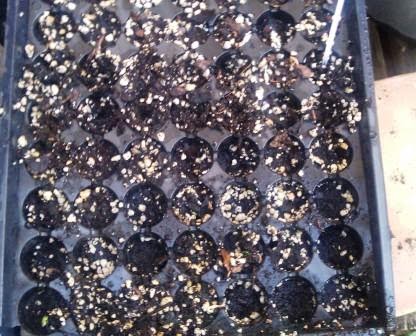
So, the next day I carefully separated the sinkers from the floaters.   The floaters went in one starter flat and the sinkers went in another starter flat.  They were placed in the same area so that they would receive the same amount of water and sun.

I planted them on Thursday afternoon and as you can see that by Sunday morning there was a definite difference in the germination between the floaters and sinkers.  The floaters were sprouting away and the sinkers not so much.
Sinkers on Sunday May 11

I waited until Tuesday to check on them again.  At that point, the floaters and sinkers were the same size!!!!

So, the sinkers germinated quickly, but once germinated didn't grow up any faster than the slower germinating floaters. 
Floaters on Sunday May 11

Unless you are in a really short growing season and you need those extra two days, there is no difference between your floaters and sinkers, except that some float and some sink.

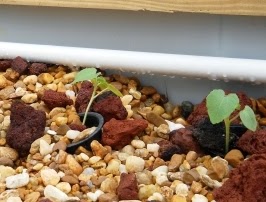
I transplanted both floaters and sinkers into flood and drain grow beds.  I have one bed filled with lava rock and the other filled with hydroton.  I also set a couple of floaters and sinkers in a DWC raft.  I also put one each floater and sinker in soil.

Since transplanted on Saturday, floaters and sinkers in the lava rock have produced their first true leaves.  The floaters and sinkers in the hydroton and the DWC raft have not produced true leaves yet.

As you can see in the photos I took today (Monday), in the lava rock grow bed, there is no difference between a floater and sinker.

Floater and Sinker on May 19


So, don't throw out your floaters. 

Stay tuned for updates during the growing season.