Showing posts with label aquaponics. Show all posts

Tuesday, April 21, 2015

South Florida Gardening Winners and Losers

So if you follow this blog, you must think I died or quit gardening.  Quite the contrary.  While the rest of the country has been dreaming of gardening, I've been doing it.

The South Florida growing season is drawing to a close and the rest of you are just getting started,  Here is what worked for me this year and what was a flop!

The Biggest Loser!

cucumber growing with aquaponicsBy far, the worst performers in my garden this season were the cucurbits!  I am not holding a pity party for them however.  They had much going against them, but they didn't give it much of a try.  I know I was not alone.  During a visit to a local nursery in January I overheard the staff in charge of the vegetable section tell a customer they had no luck with cucurbits either.  Our November was cooler than normal, followed by a December that was not only cool, but it was damp as well.  A quick review of cucurbit growing conditions does not include the terms "damp" or "cool".  I managed to get just a few Straight Eight cukes out of a raft using the Deep Water Culture (DWC) technique.  Growing a vining plant using DWC is always a challenge.  We ran string to get it to the garden frame and then just let it grow from there.  The plants in the flood and drain grow beds never produced at all. I ripped them out in January.  Despite many different attempts, I was not able to get new seeds to sprout.  Zero squash, zero melons, few cucumbers.  Cucurbits were a bust!

The Loser Runner Up!

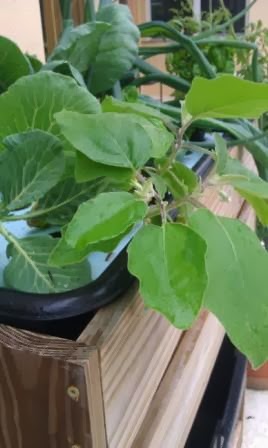
Is there a runner up loser place at the podium?  I don't know if it is official place, but cucurbits were almost beat out by the nightshades as poor performers.  The cool and damp conditions were not embraced by the eggplants.  They were tolerated by the peppers and the tomatoes thrived so the nightshades mixed performance kept them out of the bottom position.  eggplant in aquaponics The irregular weather conditions resulted in problems with chlorosis.  I had to chelate more this season than I have in any season past.  This picture is a perfect representation of the eggplant problem this season.  I harvested less than a dozen fruits.  Usually I can keep eggplant going into May.  This year it was done by February. This is the second year I have grown eggplants relying solely on aquaponic methods. Last year was such a success!  This year not so much.  Next growing season, I commit to growing with and without soil. 

The Good Stuff

Now for the winners!  I tried celery in a flood and drain bed for the first time.  OK, true confession time, it is the first time I have tried to grow celery ever.  Maybe celery is easy to grow, maybe the cooler than normal temperatures were a factor.  I just know that it grew exceptionally well. It has been tasty too!
celery in aquaponics
So next year I will try celery again and see if it is a fluke.  As an aside, I discovered that celery leaves are pretty tasty when they are young but bitter when they are older.  It is awesome to harvest your celery and then not spend all that time in the kitchen scrubbing the dirt off.  That is an unsung benefit of growing with aquaponics, faster produce cleaning in the kitchen!


swiss chard in aquaponics
Another big winner were the greens.  I grew kale and swiss chard with lots of success.  The chards took a littler longer to get going this year, but once they got going, there was no holding them back. The chards and kale were grown in both NFT tubes and flood and drain beds.  I didn't try any of these in soil this season.


Last year, the greens in the NFT tubes were the big winners, this year the plants in the flood and drain beds out performed their tube counterparts.  It just goes to show that when it comes to gardening, there are always surprises. 

This was my first season with Dinosaur kale.  It grows very quickly no matter the weather or light conditions.  Three plants were all that were necessary to provide more than enough for our table of 2.

The Winners!

The winners were the mints, including basil and the peppers and the tomatoes.  I had tomatoes in soil and tomatoes in my aquaponic gardens.  I tried something old, Mr. Stripey, something new, Arkansas Traveler, and something borrowed and blue, Indigo Rose!
basil in aquaponics
The basil went wild in the NFT tubes.  I had to end up moving a Dinosaur kale to make more room. 

indigo rose tomato and cayenne pepper in aquaponics
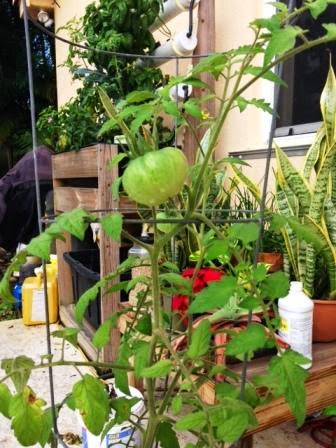
 This is an Indigo Rose growing in an NFT Tube with a little cayenne pepper poking out behind it.  The Indigo Rose seeds were from my son's garden in Ohio.  When I visited in August, I opened one of his ripe tomatoes onto a paper towel and spread out the seeds and flesh to dry.  I brought the dried paper towel home and planted it, towel and all in October.  The Indigo Rose was by far the most prolific producer.  I had them in DWC rafts, flood and drain beds and soil.  They performed well in all situations.  The only down side to this tomato is that it takes for-fricking-ever to ripen.  The portion of the tomato that is kissed by the sun turns a bluish purple, the remainder will turn red or yellow when the tomato is ripe. 
Arkansas traveler tomato in aquaponics
 This was my Arkansas Traveler when it was setting its first fruit.  I only had one plant this year, but will certainly save seeds (using the paper towel method) because this is a great tasting tomato. It doesn't grow extremely large in either plant size or fruit size.  When ripe, it is a pink color.  It is very tasty and low acid.
mr stripey tomato
This is a "Mr. Stripey" that was growing in soil in a pot.  A real down side to buying starter plants is that anyone with a sense of mischief can cause problem in the garden center.  I bought this plant as a start and it was clearly marked "Mr. Stripey", which happens to be one of my favorite tomato varieties.  As it began to set fruit, O started doubting the veracity of the tag.  The tomatoes weren't as large as they should be and didn't exhibit stark striping.  When the first fruits started to ripen I knew I had been had.  The fruits turned red and not the beautiful orange-ish shade sported by Mr. Stripey.  I don't know who this imposter is, but it produces a medium sized red tomato with very light striping.  Unlike Mr. Stripey, it is very low acid. I am not saving the seeds.  I considered prosecuting it for impersonating a beloved heirloom, but decided the real culprit was the person at the garden center, not the plant.

Inedibles in Closing

  Believe it or not, the winter months aren't all about vegetables here at the end of the peninsula.  The shorter days mean that lots of plants start to bloom.  While you are looking at snow, I'm looking at kolanchoes.
 I'm enjoying the orchid blossoms.
And the Bolivian gloxinias start to bloom before Christmas and take us all the way through to Easter.
 
My season was a mixture of hits and misses.  Let me know what you are doing to make your season a success.  I'd love to hear from you!

Monday, June 2, 2014

Aquaponics Doesn't Have to Be Ugly


My hubby has been itching to build a new aquaponic garden.  He has had an IBC tote cluttering up the garage for several weeks.

The problem is that we are running out of space.  We do not have much growable space to begin with.  Some of what we do have is shaded.  The areas that get enough sun for growing edibles are already occupied by aquaponic gardens or conventional soil beds.
Little Okra

He has been eying our swimming pool deck and commenting about the abundance of sun it receives.  Of course it does, who puts a swimming pool in the shade?  I could see where the hints were going.  By the time he said he wanted to put an aquaponic garden by the pool, I had accepted that this was going to happen.  I just wanted to minimize the damage. 

By damage, I mean that our house is built around the pool area.  It is visible from most rooms in the back of the house.  I did not want to look at something ugly.  Let’s face it, most aquaponic gardens are collections of tubs, barrels, buckets and lots of pipes and tubing.  These components are not terribly attractive.  While our existing aquaponic gardens are not eyesores, they are not exactly things of beauty.  Even though they are full of beautiful growing things, I don't want something like that the focal point of the back of my house.

I was willing to compromise (one of the reasons we have been married for over 30 years) and he was willing to compromise (another reason our marriage has lasted so long).  I agreed to the IBC, if he agreed to do some extra work so that it was not an ugly eyesore.

IBC Aquaponic Garden
Voila!  He clad the system in pressure treated lumber so that it will withstand the elements and from the house, it almost looks like a hot tub! The bottom holds 125 gallons and the top gives us a grow area of roughly 4 feet by 4 feet. Plenty of room for the tilapia and veggies!  He fitted it with a bell siphon, but I would like to change it over to a timed flood and drain. I like the way that method performs on the larger systems.

This past week end we began cycling.  Because I can’t stand for the fish to die, we are cycling with ammonia.  You can read my January post about my experiences cycling with and without fish and come to your own conclusions about cycling with fish.

Just to start, I put in some purple hull peas and Cajun Jewel okra.  I already have plenty of okra in our other grow beds and even some in rafts and NFT tubes, so I think we can expect a large crop of okra.  Unfortunately, because it is the rainy season, there is very little we can grow.  Summer in South Florida is like winter in the Midwest or North, there are very few edible plants that can survive.

Which brings me to an RIP moment.  One of the first thunderstorms that came barreling off the Everglades produced a lightening strike that has taken out one of my coconut palm trees.  As you can see in this photo, the tree is dying and you can even see the stripe on the tree trunk where the lightening exited. 
Coconut Tree with Lightening Scar
 It appears that the areca palm next to the coconut is a goner as well.  The areca only went in after hurricane Wilma.  The coconut is over 20 years old.  I  will miss them.  Its like saying good-bye to an old friend.

Areca with burned fronds
Do you get attached to your trees?

Thursday, March 27, 2014

Worms in Aquaponics?

Last week I was cleaning out one of the beds that uses a continuous flow technique.  The plants had become so overgrown that it was time to do some serious pruning.  Because I was removing so much of the top of the plants I thought it would be a good idea to prune the roots as well.  These Everglades tomato plants are so hardy and they really respond to this pruning technique.

The grow media in this particular bed was a base of pea sized gravel with about 2 inches of expanded clay (Hydroton) on the top.

When the bed was first set up, I put some earthworms in there just to see how they did.  The answer to that question is..... they did wonderful thank you very much!  The earthworms help break down solids from the fish tank and help keep your grow beds clean.  They also assist with "mineralization" which is a fancy term that means they convert their food to available nutrients for the plant roots.  If you read much about serious aquaponics then you will run across the use of worms, but not earthworms.

My earthworms didn't know that they were not the preferred worm for aquaponics.  Each time I dug up some roots to prune I came up with enormous earthworms!  Now I know many aquaponic enthusiasts are crazy for red wigglers for their worms, but I am liking earthworms.  The first and foremost reason is because earthworms are cheap.  They are already growing in our compost beds.  We don't have hardly any red wigglers in our compost.  Maybe they aren't indigenous to South Florida.  I don't know, I just know that if you want red wigglers you have to buy them.

Because our compost pile is fed with bunny manure, I purge the worms before putting them in the bed.  I don't want to introduce any e.coli from our furred friends into the aquaponic gardens. 

Purging the worms is easy, just put them in a small amount of moistened corn meal for a few hours and they will have the equivalent of terrible diarrhea and vomiting. It is gross when you look in and see all that black gunk in the cornmeal, but the worm is clean inside and out.

I just give them a quick rinse in some water from one of the fish tanks and then into the bed they go and boy do they grow!

I put just a few earthworms in there when I set up the bed with the tomatoes at the end of last summer and now it is full of earthworms.  I have been routinely adding worms to each new bed that we set up, but I haven't done much in the way of digging around to see how they were doing.  Out of sight out of mind is the way they have been operating.

So I say if you don't have some worms in your grow beds, get some.  You may not have to go any further than your compost pile.

So do you use worms in your aquaponics beds?

Thursday, February 13, 2014

Aquaponics and Iron

When I very first started learning about aquaponics I was under the misconception that if you kept the fish alive and happy the plants would automatically be happy.

How many of you have fallen for the mis-information touted by some who only want to sell you their aquaponics-related product?  They will tell you that an aquaponic garden is a totally closed system that only needs the addition of food for the fish.  I also read that aquaponic gardens require little to no care.  Pfffftttt.

My aquaponic gardens are in many ways more easier when it comes to care but they are not care-free.  One thing that is common to both aquaponic gardens and soil gardens is chlorosis, or a need for iron.  Because the deficiency interferes with chlorophyll it is fairly easy to spot.  The leaves will become light yellow but stay dark around the veins.

 Iron in Aquaponics Explained by Nate Storey is a great place to learn exactly how iron acts in an aquaponic situation.  In a nutshell iron may be unavailable in aerobic situations.  Since growing with aquaponics is aerobic, you need to dose with iron on a regular basis.
Here is a picture of one of my sweet basils that needed a dose of iron.  As you can see, other than the color of the leaves the plant looks "normal".  Tthis is not healthy for the plant but it is common in aquaponic gardens, especially if your pH gets on the high side of the scale.

I use Fe EDTA because it is available to the plants even in a high pH situation.  This isn't true if you use something like seaweed fertilizer.  I read lots of folks raving about seaweed fertilizer for their aquaponic systems but I don't see iron (either present or in a form available to the plants) ever listed on the label.

The Fe EDTA I use is just the iron in a 6% strength.  It works.  It is not terribly expensive.

Just look at how this basil responds in just a few days.  Hard to believe that is the same plant isn't it?  Looks much more tasty to me! 
Basil After Iron

The "experts" say to dose your aquaponic system on a regular basis with iron.  I only dose my system at home when it shows signs of chlorosis.  At the Together We Stand gardens, we dose about once a month because the pH of the water stays high.

Aquaponic gardens can be easier than gardening with soil, but it still requires your attention.  You just don't have to weed and water!  Instead you have to do things like feed the fish and monitor water quality for ammonia, nitrites and nitrates. 

Thursday, January 9, 2014

Cycling A System - Should You Go Fish?

Aquaponic systems are closed loop systems that replicate the naturally occurring symbiotic relationship between plants and fish.  Fish provide nutrients for the plants and the plants clean the water for the fish.  Like all relationships, this one takes time to develop as well.

Whether you are designing your own system or looking to purchase a prefabricated system you should be aware that it will take some time for your system to function so that fish and plants are both healthy and growing.  The process of establishing this symbiotic relationship is referred to as "cycling".

You can cycle with fish or without fish.  The choice is yours.  Whether you cycle with fish or without fish, you will need to keep an eye on the water chemistry so go ahead and invest in a good water quality test kit.  These kits will allow you to test for pH, ammonia, nitrites, and nitrates.

I have cycled systems both ways and I prefer fishless cycling.  I will admit it:  I am a mushmellow.  It bothers me when fish die.  I feel like I am their steward and when they die I have failed them.  The truth is when you cycle with fish some fish are going to die.  During cycling there will be ammonia and nitrite spikes that will kill fish.  It is a natural part of establishing the system.  Even if they are just the cheap little feeder goldfish from the pet store, it hurts me when they die.  So I like to cycle without the fish.

In fishless cycling you add ammonia to the fish holding tank (that has no fish in it) in an amount sufficient to bring it up to 0.5 ppm.  You then test the water daily until levels fall back below 0.5.  You add ammonia again to bring it up to 0.5 and wait for it to drop.  After a week or two of this you will start to see some nitrites show up.  These are the nitrosomona bacteria that are establishing themselves in the system and will start to convert that ammonia to nitrites.   You should see a big spike in nitrites before the nitrates show up.  Once the nitrates show up that means you have nitro bacters growing in the system. These guys will take nitrite and convert it into nitrate.  Once this cycle is established you can safely add fish to the system. 

The amount of time it takes to cycle a system without fish can vary from 3 to 6 weeks.  Things that affect the cycle time period are water temperature and pH. Keep your water temperatures on the warm side and the pH in the neutral zone. Also, if you start cycling with water straight from the tap, it will have chlorine in it.  This chlorine is there to kill the unsafe bacteria in your drinking water.  It will also kill your nitrifying bacteria.  That means anytime you use straight tap water you are setting yourself back.  Luckily chlorine readily off-gasses and if you let your water stand for 24 hours the chlorine/chloramine will dissipate and you can safely use it in your aquaponic system.  This is especially true when you need to top off an existing system.

Cycling takes patience.  In the mean time, enjoy the plants that you put in your system.  You have to have plants for the cycle to be established, so plant some water loving plants.  Things like basil, mint, and tomato will do well in a system that is not cycled.  This is because they like water and the lack of nitrogen doesn't really bother them.  In fact, if nitrogen levels get too high, tomato plants will grow but not bloom!  Onions are also great plants for cycling. I've even cycled with petunias!

There is another method of fishless cycling that is mostly promoted by men. It is called "pee-ponics" and instead of adding pure ammonia from the store into the system, human urine (referred to as "hummonia") is added to the system.  Don't really understand why men want to pee into their aquaponic systems, but to each their own.

You can speed up cycling by inoculating your system with bacteria from a healthy system that is already established.  This can be done by taking water from the filter of a healthy system or simply taking water from a healthy system.  Be very careful when doing this.  If the system from which you take your water is not healthy, then you have just spread its disease to your system.  If you have one already cycled and well operating aquaponic system, then by all means harvest the bacteria from your existing system to jump-start your new system.

Lastly, you can go to a pet store that deals in aquariums and purchase bacteria in a bottle.  I am not a fan of this because it is pricey and honestly, how long can those bacteria live in a bottle?

How do you cycle?  I'd love to hear your experiences.

Wednesday, January 8, 2014

A Tale of Two Eggplants

I love nightshades.  They are one of the most diverse families of plants and contain some of my most favorite things to eat.  The Solanaceaes include tomatoes, peppers, eggplants and potatoes.  It also includes petunias and tobacco..  You can keep the potatoes, petunias and  tobacco.  I don't smoke, I don't like to eat potatoes ( I prefer rice) and petunias stink. But tomatoes, peppers and eggplants....Oh My!  And cooking all three together?  Even more Oh My!

I am currently growing several types of tomatoes, peppers, and one type of eggplant.  I have had poor luck with germinating pepper and eggplant seeds this season for some reason.  I put my eggplants in two different test systems this time to see if there was a difference in plant growth or production.  Early results say that my eggplants are preferring a flood and drain environment to a deep water culture (DWC) system.

Here is the picture of the eggplant in my flood and drain test bed. 
The largest leaf on this plant measures 9" wide and is 11" long. As a matter of fact I had to tie it up today as the leaves are so heavy the plant had flopped over and was shading the rosemary.

Here is a picture from the deep water culture test bed.
The largest leaf on this plant measures 4" wide and 4" long. It has just flowered.  Same type of plant, planted at the same time.  By the way, look in the background of this picture and you can see how much my onions love DWC. If you don't have onions in your DWC get some now!

The flood and drain system is only slightly older than the DWC by about 2 weeks.  Both systems were cycled early last spring so they are approaching their first birthday.  Both have the same number of fish.

So far, it is looking like flood and drain is the way to go for growing eggplant.  Part of making sure your garden can survive is testing things out to see what works best.  Before growing anything on a larger scale, I run a test garden. I am also currently testing peppers in flood and drain versus nutrient film technique (NFT).
Stay tuned for those results.

How do you grow your eggplants?

Tuesday, January 7, 2014

Why Round is Better All Around

Just because I haven't been blogging doesn't mean I haven't been busy.  It means I have been too busy to blog!

Here in South Florida, what every one else calls winter is what we call our growing season.  It is the only time when temperatures, humidity levels, and rainfall all fall back into levels that support hearty and healthy plant growth.

In our own aquaponic systems we have mints, onions, peppers, tomatoes, brussels sprouts, eggplant, arugula and endive chugging along.  In soil we have tomatoes and peppers.  Each and everyone has appeared to have had a very merry Christmas and are starting off the new year great.

Things weren't the same over at the Together We Stand gardens.  The aerator to the fish tanks gave up the ghost. Fish croaked (and these fish are tilapia not croakers - a totally different fish but I digress).  Ammonia levels spiked. Fish croaked.  Ammonia levels went higher.  Well you get the picture.  We were stuck in a closed loop of high ammonia levels and dead fish.  Significant water changes were only making a marginal difference.  We lost over 60 fish in one day!  At this rate, this aquaponic garden was not going to survive.  It was time for detective work.

We started with what we knew to be true.  Aeration had been restored.  Dissolved oxygen should not be the culprit. Even after a couple of 60% water changes ammonia levels continued to be off the charts. The fish were not being fed so they weren't making the ammonia and after removing the dead fish the levels did not come down.  There had to be something we were missing....and there was.

The fish tanks in use are designed with grooves on the inside for placing dividers.  The bottom of the tank is a series of three inverted pyramids.  This is supposed to allow the grower to divide the tank into three areas to separate fish of different sizes.  If you don't understand the description, here is a picture (which should be good for at least 1,000 words).
In reality what this actually does is provide a very deep area in which something like a dead fish can settle. Yes folks, that is what turned out to be the source of our ammonia problem.  After draining the tanks down  to about 25% we were able to see the 13 dead fish that had settled in those inverted pyramids.  When the aerator failed, not all the fish that died had floated. Some had settled and that was the source of the ammonia.  Once those areas were cleaned and the tanks refilled, the ammonia levels  went down and stayed down. I don't want to live those 2 days again.  But, with the mystery solved on the third day we were back on track. 

Dr. James Rakocy, the father of aquaponics has always advocated for round fish tanks.  You can't hide in the corners if there aren't any corners.  Now even though these tanks have radius corners at the edges, they still have corners of a sort on the bottom.  So to the adage that tanks should be round, lets add that they should have flat bottoms.

After all, how can your garden survive if the fish themselves can't survive?

Monday, September 23, 2013

Don't Overthink or Over Engineer Your Systems

It is so easy to get carried away with the physics involved in building your aquaponic grow systems that the  simple becomes unduly complex.  Complex is not good. Complex is rarely if ever easy to maintain. Try to avoid complex as much as possible.

If you think effort goes into designing a large system, just try to re-design a large system after all components are in place but not functioning as they should.  Implementing the re-design means that you have re-do all the previous hard work.  Not efficient use of time or energy.  If you and your garden want  to survive, you need to use your time and energy as efficiently as possible.

The following is a great case in point of over designing a system.  When the a frames for NFT (nutrient film technique) tubes were first designed and built for the Together We Stand project, the designer was greatly concerned that because the water was going to flow through 4 tubes before draining that all the nutrients would be absorbed by the plants on the top row and the plants in rows 2 through 4 would be nutrient starved.  So a complex manifold system was created and installed to give equal feed of the nutrient rich water into the top of the a-frame.  Truly a beautiful design as you can see from here.
Since each A-Frame has two sides, there was a manifold for each side of the frame.  Of course, this system over engineered a problem that didn't exist.  See, the nutrient levels at the top tube of an A-Frame are not significantly lower than the bottom tubes unless your system is extremely nutrient deficient. So, this overly complex design solved a problem that didn't exist.  However what it did do was utilize flow tubing that was so small you didn't get good water flow and it clogged constantly. In addition, since each tube was fed individually, it drained individually.  If you think that manifold was something, then check out this drain system

Looks like some kind of octopus, right?  In addition, note the use of clear tubing.  Well it was clear at the start I am sure.  But because the clear tubing allows sunlight to penetrate, algae growth was a constant problem and because of the design, 8 drain tubes needed to be cleaned on a regular basis.  All to solve a nutrient feed problem that doesn't exist!

The answer was to re-plumb the A-frame so that water enters in one location on each side of the frame and then feeds and drains each tube in sequence.  

So that anyone working on the system in the future will understand how it operates, each tube was marked at the feed and drain points and also with arrows indicating water flow.
 Note the use of dark tubing for the inlet feed tubing.  For the jumper lines between the tubes, in a stroke of genius my husband realized that garden hose would work perfectly and is certainly less expensive than other hosing. 
Since there is now only 1 drain for each side of the frame, only 2 drains are necessary.  That means we can slay the octopus and the task associated with keeping the lines clean.
It was a bit of a pain, but now these A-Frames will perform their NFT tasks much more effectively and will require much less effort to maintain. 

As a side note, you will notice in some of the photos that the tubes are marked with letters and numbers.  This is something that was implemented back when this shade house was first built.  It was done to help keep crop and maintenance records.  Even if your garden is small, if you have more than one grow bed, NFT tube system or multiple raft beds I highly recommend that you develop some sort of identification system to make your record keeping much easier.

So how did you spend your week-end?


Thursday, September 19, 2013

There Will be Pests

An early morning check of one of my systems really pissed me off.  Oh the fish were doing well, the bed was flooding and draining properly, most plants looked great except.......................the tomato.  Leaves were eaten and it was covered in little flecks of bug poo.

The tomato hornworm had struck overnight (or since my last check yesterday afternoon).  This isn't my picture, but this is what they look like.
This photo is from University of Colorado
I have to show you the picture someone else took because I was so angry I immediately hunted them all down and squished them until they were DEAD.  In a survival garden, it is the gardener that will survive, not the unwanted visitors.  Pests such as the hornworm must die, immediately.  My frenzy did not subside until the last hornworm was nothing but a green mess.

Like all gardens, aquaponics gardens have pests.  Because of the fish component, you cannot just spray poison on your plants.  Even without the presence of fish, I don't like to spray poison because I really don't want to end up eating it.  There are several ways to approach pest control in your aquaponic garden.  The cheapest is the method I employed on the hornworms.  That means searching the plant, pulling the pest off and squishing it or cutting it with shears or any other means of physical demise of the pest.  If your garden is small and your amount of time for pest control large, this is the most common method.

However, if you have a large gardens this might not be practical.  At our Together We Stand gardens, we use the pick and squish method when we have a large number of volunteers and a small number of pests.  This pick and squish method works great for squash bugs as well as those dreaded hornworms.  However, our most common method is the application of a biological pesticide such as Bacillus thuringiensis.  This is a bacteria that naturally occurs in some soils.  This bacteria is highly toxic to many caterpillars and other garden pests, but it is safe for higher life forms (that means you, your fish, your dog, your chickens, your cats, etc).  It can be found most commonly under the name DiPel. This is what we use when the pests outnumber the volunteers.  It is kinda stinky, so you have been warned. If your garden is organic but not aquaponic, you can use DiPel and keep your organic status.  You do have to be careful with the application if your garden has an area for butterfly gardening.  While butterflies are not normally part of a survival garden, their nectar plants are commonly planted in the garden area to attract pollinators. You can bet the drain and flow system that housed those hornworms is getting a dose of DiPel!

You can also use companion plants as pest deterrents.  My father always planted marigolds around his garden.  I hated the smell of the marigolds and he always assured me that most pests agreed with me and would stay out of the garden because they hated marigolds as well.  This year I tested the marigolds I despise so much in the NFT tubes above one of my flood and drain grow beds.  Very little pest problems at all  Marigolds are famous for warding off nematodes (which are not a problem in aquaponic gardens since you are not using soil) but they worked very well for whitefly too! While the plants near the marigolds still attracted a few aphids, it was nothing like the aphids that tried to flock to other areas of the gardens.  So like them or not, marigolds are here to stay in my garden.

Just like any garden, the aquaponic garden must be walked at least once a day during growing season to check for pests and arrange for their demise when found.

Got any ideas on organic pest control?  Share them with me!

Tuesday, September 10, 2013

Following the Laws of Nature

Some of the posts I have read on the aquaponics boards I follow have led me to believe that people think that aquaponics is some sort of plant growing magic.  That if you grow a plant with aquaponics you can somehow ignore all the parameters that nature has placed on a plant. 

It is not true.

If you want to survive, you have to know what will grow successfully when.  If you are in Montana and there is three feet of snow on the ground, you can't grow a tomato with aquaponics unless you control the environment.  The self sustaining nature of aquaponics will not allow that tomato to survive the cold unless you do something to control the temperature.  You need to know the agricultural zone in which you live.  To find your zone number, go to USDA Plant Hardiness Map and enter your ZIP code.  Memorize this number.  When you are researching plants and seeds, the provider will always tell you in what zones the plants will grow.  Staying within your zone will contribute to your success.  Staying within your season is also important. Just like the guys in Montana can't grow tomatoes in winter because of the cold, I can't grow cucurbits (like cucumbers, melons, squash) in summer because the air temperature is just too hot.

That means you need to learn about both growing the fish and growing the plants.  For example, we recently had heavy rains (quite normal for our south Florida summer) and as a result some of my plants (both soil and aquaponic) were infested with powdery mildew.  Just because the plants were in aquaponic systems did not make them immune from the mildew.  In this case, all I did was remove the infected parts (they did NOT go in the compost) and the plants recovered quickly because I acted quickly.  If necessary, I could have sprayed with a solution of baking soda and water (keeping an eye on the pH fo my water).  The point is no matter if the plant is in soil or not, you need to know how to take care of the plants, because if you have a garden you will have pests and diseases.  Your goal is to minimize these while maximizing yield.  That is where aquaponics comes into play. You are going for high yield because you are using your animal protein growing system to provide the food for the plants, thus providing constant nutrition to the plants. 

Another question I read was from someone who wanted to know why the seeds his neighbor have him weren't performing like the neighbor's plants.  Well, if your friends give you the seeds of their hybrid plants, you can't expect them to perform the same.  No matter if the plant is growing in aquaponics or soil, you can't save the seeds of hybrids and expect them to reproduce true.  Always use heirloom or non-hybrid seeds.  Learn to dry and save your own seeds. When someone offers you seed, ask them about their source.

Monday, August 19, 2013

Aquaponics vs Soil - Growing Okra

If you have ever grown okra in soil, you know there is a very small window in which to harvest your okra.  One day's growth can make all the difference between okra that is edible and okra that is so tough and woody you can barely cut it with a knife.

This summer, I have been testing okra in both soil and aquaponics.  I started all tests using Cajun Jewel variety of okra.  This is an heirloom variety and I used organic seed.  I soaked all seeds overnight before planting.  I have to admit, this was great seed from the Southern Exposure Seed Exchange.  The germination rate was almost 100%, with only a couple of seeds not sprouting.

The only fertilizer I used on the soil-based plants was a bit of organic bone meal scratched into the soil as a side dressing two weeks after the plants germinated.  For the aquaponics plants,  I used both flood and drain and deep water raft techniques.  The soil grown plants did begin to produce much faster than the aquaponics plants by almost 10 days. I didn't see much difference in production between the soil plants and the aquaponics plants. All plants produced profusely all summer long.  But I did see one major difference that makes aquaponics the hands down winner.

When grown with aquaponics, the okra was still tender even when it was well over 3 inches long.  The soil based plants produced pods that were quickly tough when they exceeded 1 1/2 inches.  This is important if your schedule doesn't allow you to get out and harvest every single day.  Also, if you are planting for survival, you can't afford to let a single pod go to waste (or the compost). 

As you can see, in this flood and drain set up, the leaves are huge and the pods have been tender, regardless of how large they were allowed to grow. 

Another benefit of the large okra leaves is that they provided shade for my lettuce.  By placing my lettuce in the lower NFT tube, the okra provided needed shade.  I am in South Florida, and our August sun is harsh.  The okra allowed me to continue to grow lettuce with aquaponics when it would not be possible with soil.  This is another survival technique that I recommend.  Layer your garden to take advantage of  what nature provides. It will extend your growing season.

You might notice that I used marigolds on the upper NFT tube as a companion plant.  The only problem I had with pests was a brief encounter with aphids.  I have never been a fan of marigolds, but I am sold on their effectiveness in repelling other pests (especially squash bugs).

So have you tested plants in soil versus aquaponics? I would love to hear your results.

Wednesday, July 17, 2013

Another reason loop siphons beat bell siphons

If you are just getting started with aquaponics, you are probably reading all you can about the miracle of the bell siphon.

Well, they aren't miracles they are physical science in action and while they do fall in the nifty, keen-o, fine-o category we have found several problems with them.

Add one more to that category.........root intrusion from the grow bed!

We recently stepped out of town for a little over two weeks.  We had someone periodically peek in on our systems and feed the fish a few times.  We were shocked when we got the panicked phone call that one of the systems was over-flowing on the grow bed and loosing water in the fish tank.  While we had a good bit of rain in our absence and that might explain an over-all higher water level we do have overflows installed to take care of heavy rain.  Also, rain wouldn't explain why we would loose water from the fish side of the system.  What fun to troubleshoot from 1500 miles away!

Every thing was humming when we left town.  The plants were uber happy and the fish appeared to be happy (hard to tell when they are smiling) so all should have been good. What happened?

Well, the plants were so uber happy that they grew like crazy and even though we had the bell siphon guarded, the roots grew into the siphon itself.  The entire thing was so totally clogged with roots that the siphon could no longer drain.  Now you know it is a serious root blockage if water, one of the most persistent and powerful forces on earth couldn't make it through that root ball!

So, we will develop a new guard to protect the bell siphon from roots.  But, this has only reinforced our decision to stick with loop siphons on all of our other systems.  The design of the loop siphon does not allow for root intrusion and all of the other systems utilizing this design had no problems with roots.

So, bell = bad
Loop = good

Wednesday, March 27, 2013

Protein + Veggies = Ultimate Survival Garden

Aquaponics is a method of growing plants without soil and added fertilizers.  If you are familiar with hydroponics, then think of aquaponics as taking it to the next level.  Add in a tank of water with fish and you have aquaponics.  The fish contain bacteria in their digestive tract that is excreted in their urine and feces.  These bacteria break down the ammonia into nitrites and nitrates, providing nutrition for the plants.
Systems can be as complex as you want

Or as simple as you want